
Duolingo vs Spaced Repetition for Developers: Honest Comparison
Duolingo vs spaced repetition: which works for developers? An honest comparison of learning methods for busy professionals who need real vocabulary retention.
Science-backed guides mapping out vocabulary retention, spaced repetition, and linguistic mastery—straight from the Wordrop devs.
Duolingo vs spaced repetition: which works for developers? An honest comparison of learning methods for busy professionals who need real vocabulary retention.
Comprehensive comparison of vocabulary apps for developers: WordDrop vs Anki vs Mochi vs Wokabulary vs Duolingo. Find the best macOS-native app for ambient learning without workflow interruption.
SM-2 is the spaced repetition algorithm developed by Piotr Woźniak in 1987 that calculates the optimal review interval for each vocabulary word individually. This guide explains the exact formula, step-by-step examples, and why Wordrop uses SM-2 to help people learn vocabulary permanently.
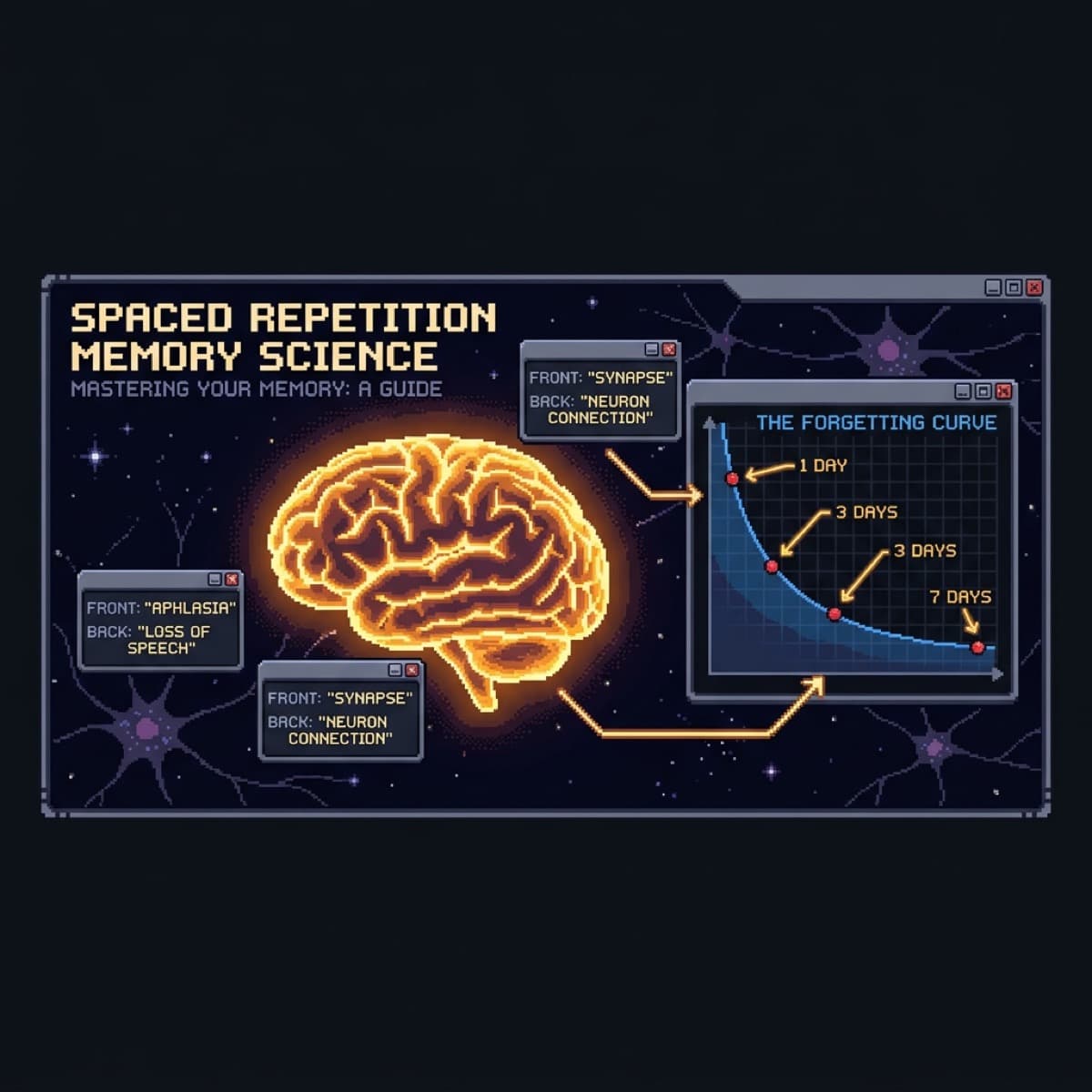
Spaced repetition is a learning technique that schedules reviews at increasing intervals to maximize long-term memory retention. This complete guide explains how it works, the science behind it, and how to use it to learn vocabulary faster.
Most developers quit Duolingo within 3 weeks. Here's the real reason language learning fails for programmers — and a method that actually fits how you work.
Discover how the SM-2 spaced repetition algorithm used by Wordrop helps your brain lock in vocabulary permanently — backed by cognitive science.
The Ebbinghaus Forgetting Curve is the reason every vocabulary study method fails — unless it schedules reviews at the right time. Here's the science explained with software engineering analogies.